Defense Attorney (Mr. Vance): Your Honor, if I may. We are not disputing the numbers. My client has taken full responsibility. But we must look at the man sitting before you. Mr. Miller is eighty-four years old. He is a decorated veteran who served in some of the most harrowing conflicts of the last century. Sending him to a federal facility at this stage of his life isn’t just a sentence—it’s a death warrant.
Prosecutor (Ms. Sterling): Your Honor, the government is sensitive to Mr. Miller’s age and his service. However, this wasn’t a one-time mistake. This was a calculated, decade-long scheme. He used his status as a veteran to shield himself from suspicion while siphoning funds meant for those who are truly disabled. Every dollar he took was a dollar stolen from a veteran who can’t afford their medication.
Mr. Miller: (Leaning forward, his voice raspy) Can I speak? I want to speak.
Judge Halloway: You have the right to allocution, Mr. Miller. Go ahead.
Mr. Miller: I spent three years in the mud. I saw things… things that don’t go away when you take the uniform off. When I came home, there was no “program” for us. You just went back to work. I felt the country owed me something for what it took from my mind. I didn’t think I was stealing. I thought I was finally getting paid what I was worth.
Ms. Sterling: With all due respect, Mr. Miller, you weren’t “getting paid.” You were filing false medical reports and forging signatures.
Mr. Miller: (Voice rising) I fought for this country! I bled for that flag behind your desk! Now, after eighty years of being a citizen, you’re going to lock me in a cage for the time I have left?
Judge Halloway: Mr. Miller, please. Be seated.
Mr. Miller: (Slumping back, looking at his medals) I fought for this country… now it takes my last years.
Judge Halloway: (Sighs heavily) Mr. Miller, this is the hardest part of this job. I look at your jacket, and I see a hero. But I look at the evidence, and I see a man who broke the trust of the very institution that honored him. We cannot have a two-tiered justice system where a uniform acts as a “get out of jail free” card for serious financial crimes.
Mr. Vance: Your Honor, a shorter sentence—perhaps home confinement?
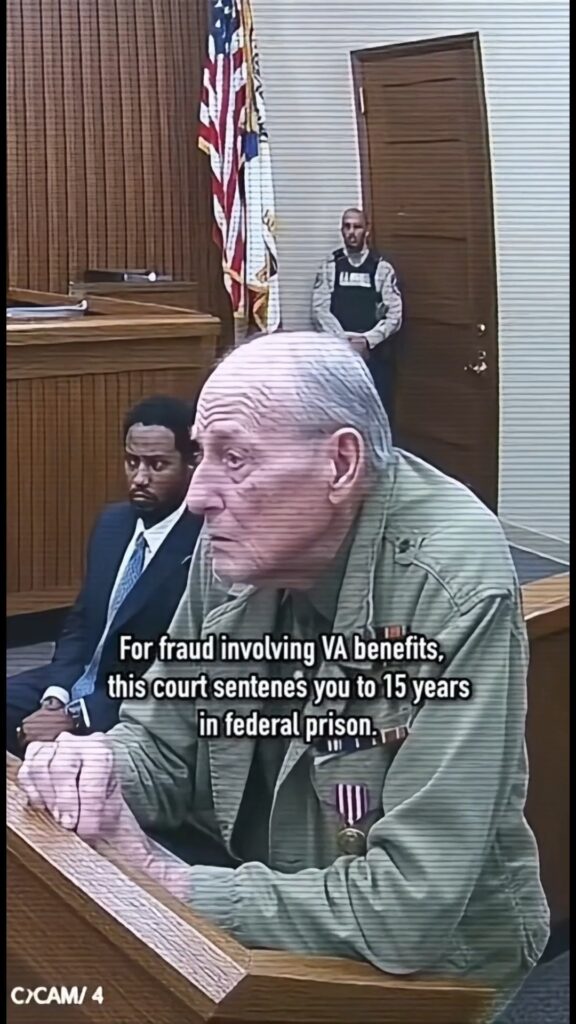
Judge Halloway: The law is clear on the mandatory minimums for this level of fraud, especially given the duration. For fraud involving VA benefits, this court sentences you to 15 years in federal prison.
Mr. Miller: (Staring ahead, hollow) Service means nothing then.
Judge Halloway: Service does not excuse crime, sir. Bailiff, please take the defendant into custody.
The Final Hearing: United States v. Miller
Judge Halloway: (Looking over spectacles) Counsel, I have reviewed the sentencing guidelines and the pre-sentence report. The defendant has admitted to systematically defrauding the Department of Veterans Affairs over a period of twelve years. The total loss exceeds $400,000.
Defense Attorney (Mr. Vance): Your Honor, if I may. We are not disputing the numbers. My client has taken full responsibility. But we must look at the man sitting before you. Mr. Miller is eighty-four years old. He is a decorated veteran who served in some of the most harrowing conflicts of the last century. Sending him to a federal facility at this stage of his life isn’t just a sentence—it’s a death warrant.
Prosecutor (Ms. Sterling): Your Honor, the government is sensitive to Mr. Miller’s age and his service. However, this wasn’t a one-time mistake. This was a calculated, decade-long scheme. He used his status as a veteran to shield himself from suspicion while siphoning funds meant for those who are truly disabled. Every dollar he took was a dollar stolen from a veteran who can’t afford their medication.
Mr. Miller: (Leaning forward, his voice raspy) Can I speak? I want to speak.
Judge Halloway: You have the right to allocution, Mr. Miller. Go ahead.
Mr. Miller: I spent three years in the mud. I saw things… things that don’t go away when you take the uniform off. When I came home, there was no “program” for us. You just went back to work. I felt the country owed me something for what it took from my mind. I didn’t think I was stealing. I thought I was finally getting paid what I was worth.
Ms. Sterling: With all due respect, Mr. Miller, you weren’t “getting paid.” You were filing false medical reports and forging signatures.
Mr. Miller: (Voice rising) I fought for this country! I bled for that flag behind your desk! Now, after eighty years of being a citizen, you’re going to lock me in a cage for the time I have left?
Judge Halloway: Mr. Miller, please. Be seated.
Mr. Miller: (Slumping back, looking at his medals) I fought for this country… now it takes my last years.
Judge Halloway: (Sighs heavily) Mr. Miller, this is the hardest part of this job. I look at your jacket, and I see a hero. But I look at the evidence, and I see a man who broke the trust of the very institution that honored him. We cannot have a two-tiered justice system where a uniform acts as a “get out of jail free” card for serious financial crimes.
Mr. Vance: Your Honor, a shorter sentence—perhaps home confinement?
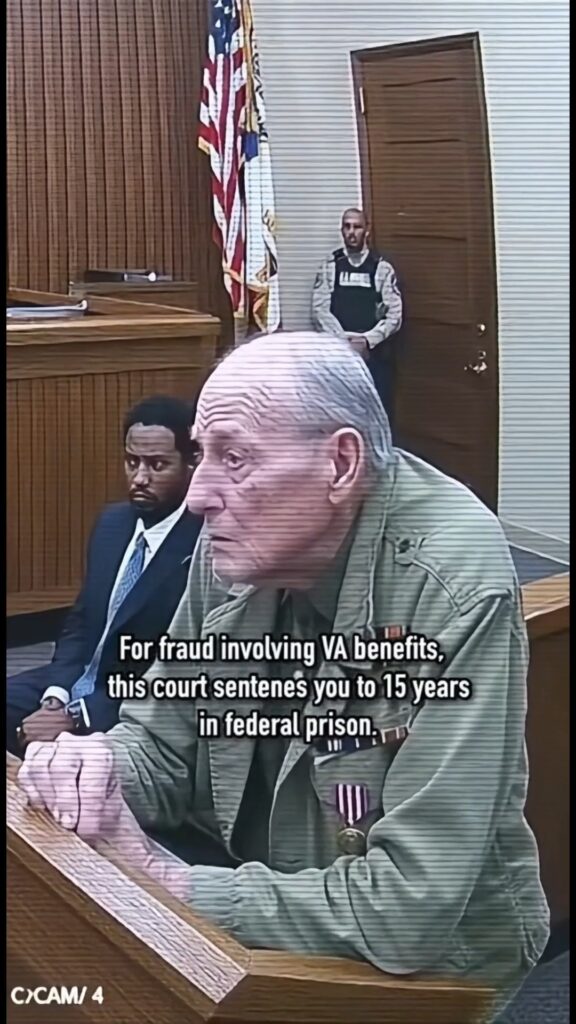
Judge Halloway: The law is clear on the mandatory minimums for this level of fraud, especially given the duration. For fraud involving VA benefits, this court sentences you to 15 years in federal prison.
Mr. Miller: (Staring ahead, hollow) Service means nothing then.
Judge Halloway: Service does not excuse crime, sir. Bailiff, please take the defendant into custody.