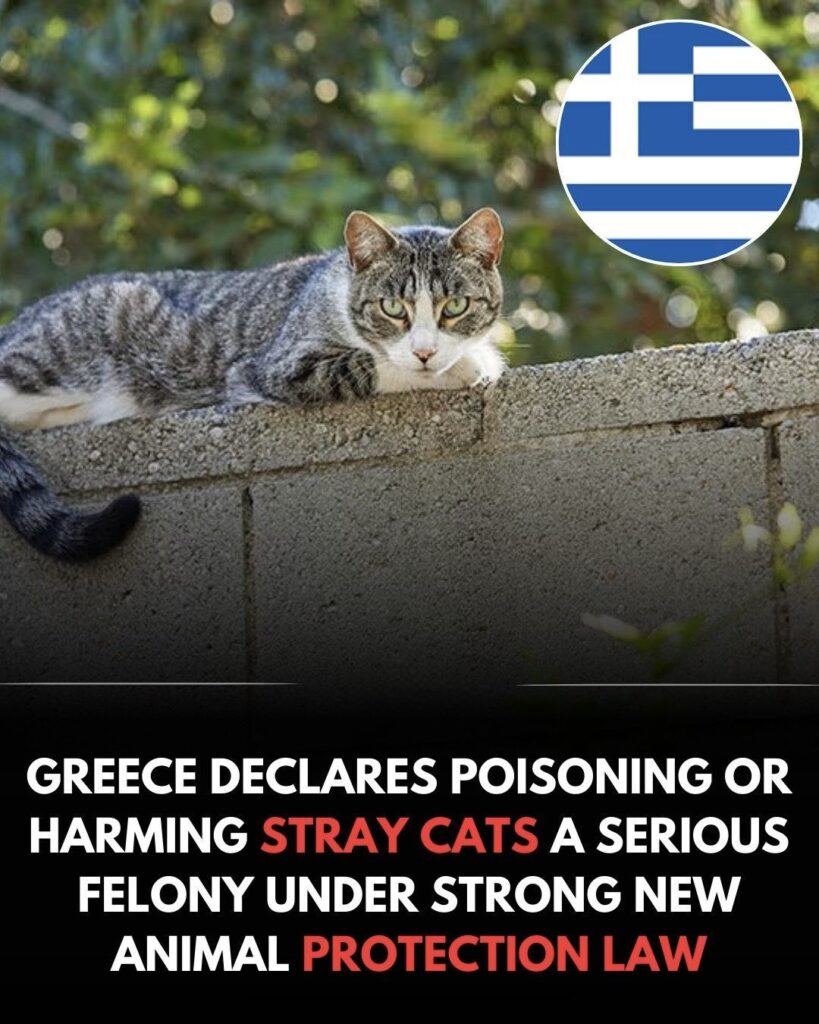
In a groundbreaking move for animal welfare, Greece has taken a decisive step to protect animals from abuse by passing a law that redefines how cruelty is treated in the eyes of the law. The Hellenic Parliament, in a unanimous vote, agreed to upgrade severe acts of animal abuse from minor offenses to serious felonies—sending a clear and powerful message: cruelty will not be tolerated.
Under the new legislation, any deliberate act of harm toward animals, including poisoning, torture, or intentional killing of strays, carries prison sentences of up to 10 years and fines that can reach €50,000 per animal. This law marks a major departure from previous regulations, which often classified such offenses as minor infractions with limited legal consequences.
The unanimous support from parliamentarians underscores a national commitment to the ethical treatment of animals. For the first time, Greece is signaling that acts of cruelty are not only morally unacceptable but legally punishable at the highest level. Animal welfare advocates say this is a long-overdue recognition of the vulnerability of stray animals, who often live without protection and are the most at risk of abuse in urban and rural areas alike.
Experts note that this law is not just symbolic—it is designed to actively deter abuse. By imposing heavy fines and long-term prison sentences, the legislation provides authorities with the tools to enforce accountability. It also encourages citizens to report incidents of cruelty, knowing that such crimes are taken seriously by both the legal system and society at large.
Animal welfare organizations in Greece have welcomed the law as a historic achievement. They point out that stray animals, including cats and dogs, often face horrific acts of violence, including poisoning, shootings, and deliberate neglect. The strengthened legislation offers them the protection they have long been denied, ensuring that perpetrators face consequences proportionate to their actions.
Moreover, this law reflects a growing global awareness that the treatment of animals is a measure of societal progress. Advocates hope that Greece’s example will inspire other countries to follow suit, demonstrating that legislative reform, combined with public education and enforcement, can create safer, more compassionate communities.
Greece’s move also carries an important cultural message: protecting animals is not simply an act of kindness—it is a matter of justice. By elevating the legal status of animal cruelty, the country recognizes that animals deserve respect, protection, and humane treatment as integral members of society.
For many citizens, this legislation offers a renewed sense of hope. Stray animals roaming cities, towns, and villages will now benefit from a legal framework that prioritizes their safety. Law enforcement and animal welfare groups are already preparing to implement the measures, ensuring that violators face the full force of the law.
This historic law in Greece proves that societies can take meaningful steps to protect vulnerable creatures. It emphasizes that progress comes not only through awareness and advocacy but also through legislation that punishes cruelty, promotes responsibility, and encourages coexistence.
As Greece sets this example, the world is watching. Many believe that stronger animal welfare laws, proper enforcement, and public education can transform societies, making them safer, more compassionate, and more just—for both humans and animals alike.