For decades, declawing was treated like a simple grooming choice — something many cat owners agreed to without ever knowing what truly happened behind the scenes. Veterinarians tried to explain it gently, shelters whispered concerns, and animal advocates raised alarms for years. But somehow, the real truth rarely reached the people who needed to hear it most.
Declawing was never just a “nail trim.” It was a major surgical procedure that removed part of a cat’s toes. It changed how cats walked, how they balanced, and how they lived. Many cats suffered silently, dealing with chronic pain, mobility issues, and stress that their families often misinterpreted as “behavior problems.” In reality, their bodies were trying to heal from something that should never have happened to them in the first place.
While awareness grew slowly, a small group of animal advocates refused to let the issue fade away. They wrote letters. They testified. They pushed lawmakers to learn the truth. Step by step, year after year, they worked to expose what declawing really meant for cats across the country.
And now, one state has finally drawn the line.
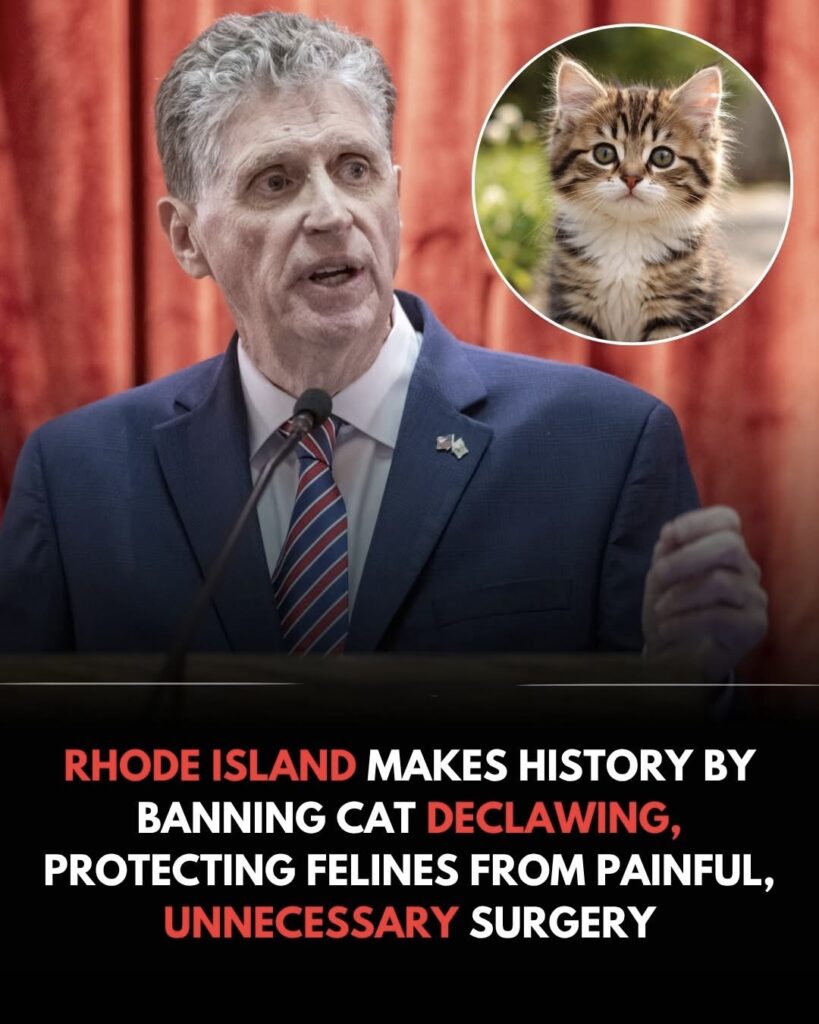
Rhode Island has officially banned cat declawing, becoming one of the few states in the nation to take such a bold and compassionate stand. Governor Dan McKee signed the legislation, and with that signature, the state sent a clear message: animals aren’t accessories. They aren’t home decorations. They aren’t objects we reshape for our convenience.
They are living beings with nerves, senses, emotions, and the right to live as naturally as possible.
The new law marks a turning point. Not just for Rhode Island, but for the entire country. Animal organizations across the United States immediately applauded the decision. To them, this wasn’t just a ban — it was a step toward a new cultural understanding. A moment where compassion finally outweighed tradition. A moment where science, ethics, and empathy all lined up together.
Advocates believe this move has the power to spark a nationwide shift. New York and Maryland already took similar steps. California cities have local bans. And with Rhode Island now stepping into the spotlight, pressure on other states is growing faster than ever.
If one small state can make such a strong statement, why can’t the rest of the country?
The lesson behind this law is bigger than cats. It’s about how society views animals in general. About the responsibility humans have toward creatures that depend on them. About choosing understanding over convenience. Because once people learn what declawing really is, most agree on one thing: it doesn’t belong in modern pet care.
Alternatives exist. Scratching posts. Nail caps. Training. Regular trimming. All simple, safe, humane, and far better for a cat’s wellbeing.
Thanks to years of effort from rescue groups, veterinarians, animal-rights organizations, and everyday citizens, the truth has finally become impossible to ignore. People are starting to understand that when we choose to bring an animal into our home, we accept the whole package — claws included.
Rhode Island’s decision is more than a law. It’s a symbol. A promise that the old ways are fading, and a more compassionate future is on the rise.
Because every cat deserves to keep the body it was born with. Every cat deserves comfort. Every cat deserves freedom from unnecessary suffering.
And now, at least in one state, the law finally agrees.