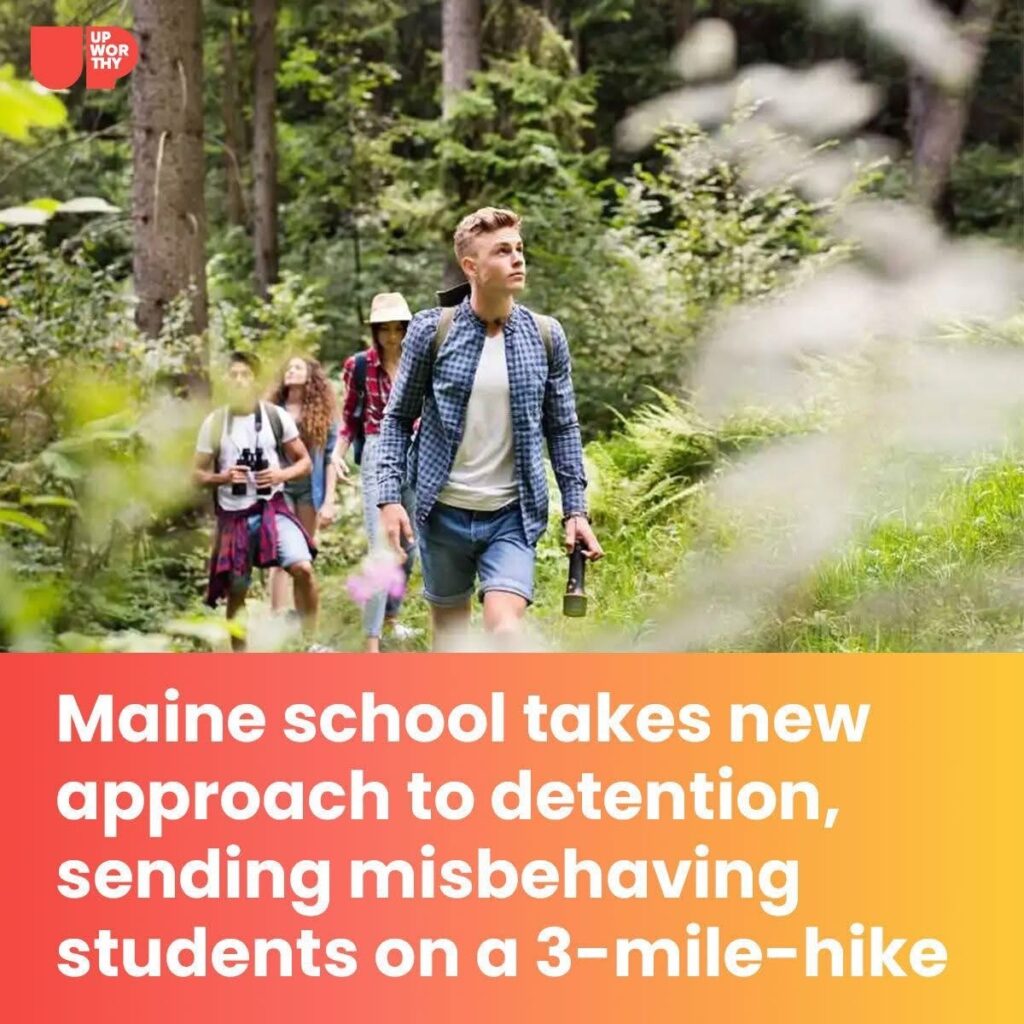
School detention has long been a method of managing—or at least attempting to manage—student behavior, the idea being that forcing kids who clearly don’t love being in school to spend even more hours being bored out of their gourd in a classroom might make them change their ways. The efficacy of detention has long been debated among educators and administrators, but one high school in Maine has started providing an alternative to traditional detention that has people buzzing.
Morse High School in Bath, Maine, gives students who have broken a detention-worthy rule a choice: Spend 3 hours sitting around doing nothing in a classroom or join the school counselor for a 3.5-mile hike. For some, that might sound more like a reward than a punishment, but there’s an intention behind the hike option that makes some sense from a behavioral perspective.
School counselor Leslie Trundy started the program in 2024 after attending an outdoor education conference. She includes some reading of nature poetry during the hike and routinely invites students to join the outdoor club she started at the school. Trundy told Maine Public Radio that she wondered whether spending time in nature might get kids to open up about problems they’re dealing with in their lives.
“My hope was that time in the woods like I could sort of take the skills that I have on the road with them or on the trail, and be a listener for them, and pay back the time to the school and sort of serve their consequence. But also receive more care and attention,” said Trundy.
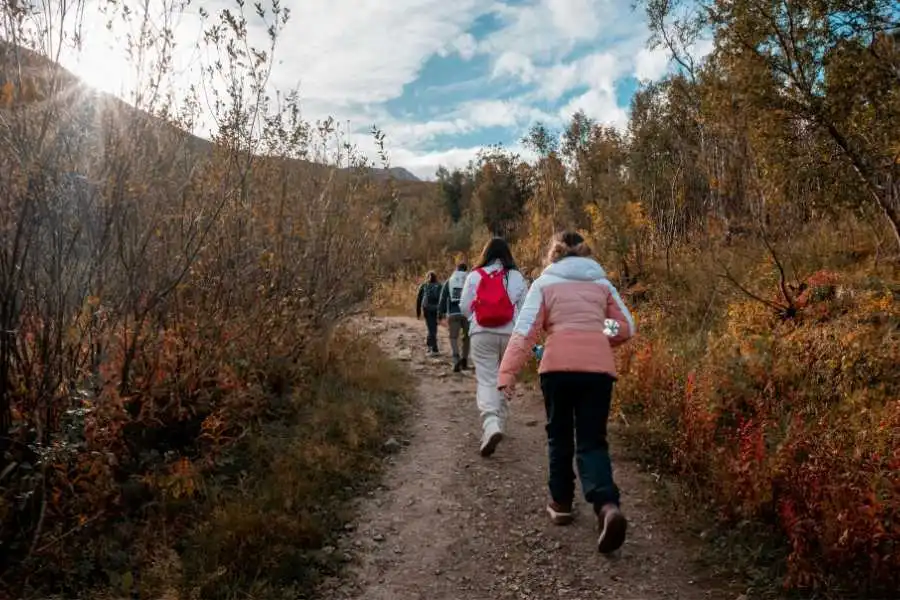
Some have criticized the approach as not being an appropriate punishment and some parents have refused to allow their kids to choose the hiking option. But according to some of the students who have participated, the hike isn’t exactly a walk in the park compared to just sitting around.
“Sometimes the hike feels really like a punishment for them, even though they’ve chosen it,” Trundy told NPR. “Like, they might’ve chosen it ’cause it was a lessening sentence, but it did feel like they were having to expend effort.”
Nicholas Tanguay, a student who was assigned detention for yelling at a teacher, concurred. But he also said the hiking offers an opportunity to reflect in a way that detention in a classroom doesn’t.
“It makes me have to, like, walk. It makes it makes you breathe heavily, obviously, and it feels like an accomplishment, almost,” the student said. “I think that maybe it’s also good for people’s mental health. I mean, in general, nature and hikes are just really good for people’s mentality. So…maybe you’ve had a bad day, the option to do this after knowing you have a detention means you have to dread it less.”
“I think the real answer is that kids of all ages need recess/outdoor time. A lot of my middle schoolers aren’t awful; they just have energy to burn and would benefit from running around for fifteen minutes every day.”
“Maybe nature hikes and outdoor brain breaks could be offered as part of the school day for all students. I bet we’d see fewer kids in detention. The microbiome of trees and plants works with our own biology to reduce anxiety, depression. Time outdoors has shown to help reduce ADHD symptoms and improve focus. When we take recess away or don’t offer outdoor time, we exacerbate problems.”
“Being out in nature improves executive function, improves mood, enhances memory and self control.I think improving connection with self, nature and others is what’s going to improve so much for kids who are struggling in school environments.”
“Maybe add dogs to walk from a local shelter for even more positive results.” (Now there’s an idea.)