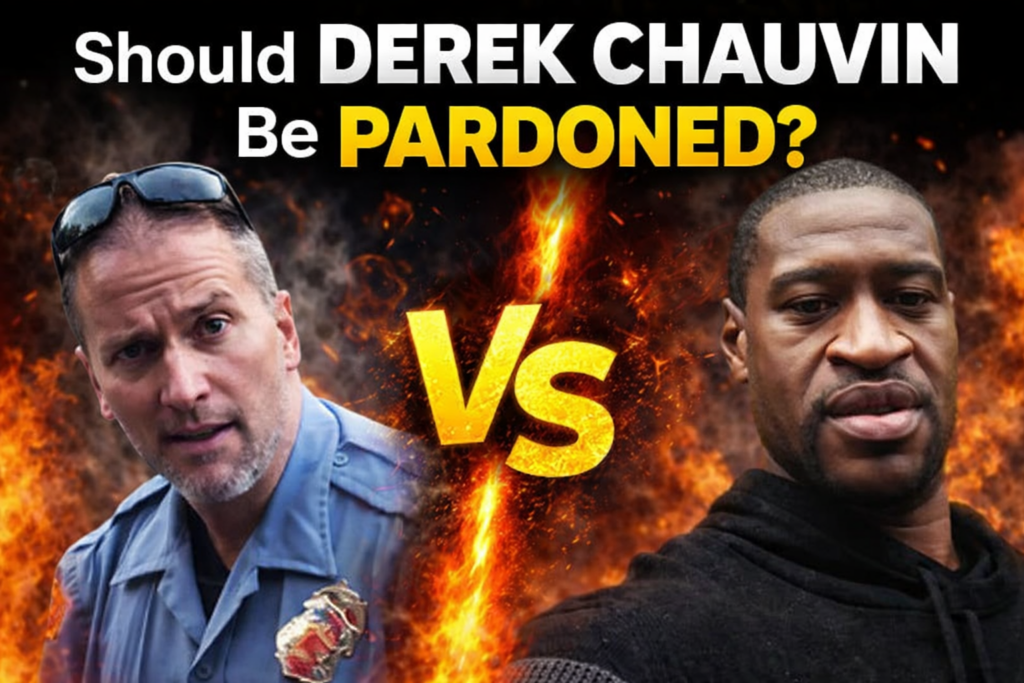
In 2020, the death of George Floyd became a defining moment in modern American history. A bystander video showing former police officer Derek Chauvin kneeling on Floyd’s neck for over nine minutes spread rapidly across the internet, sparking outrage not just in the United States, but around the world.
What followed was unprecedented.
Mass demonstrations erupted in cities nationwide, forming part of the historic George Floyd protests. Millions took to the streets demanding justice, police reform, and accountability. But as emotions ran high, so did tensions—and the case quickly became more than just a trial. It became a symbol.
⚖️ The Trial That Captivated the Nation
In 2021, Derek Chauvin stood trial in Minnesota, facing multiple charges, including second-degree murder. The proceedings were broadcast live, allowing the public to witness every testimony, every argument, and every piece of evidence.
Prosecutors argued that Chauvin used excessive and unjustified force, directly leading to Floyd’s death. The video footage, along with expert testimony, played a central role in their case.
The defense, however, told a different story. They pointed to Floyd’s underlying health conditions and argued that external factors—not just Chauvin’s actions—contributed to his death. They also raised concerns about the environment surrounding the trial, suggesting that intense media coverage and public pressure could influence the outcome.
After weeks of testimony, the jury delivered a unanimous verdict: guilty on all counts.
🌍 A Verdict Heard Around the World
The decision was met with relief by many who had demanded justice, while others questioned whether Chauvin had truly received a fair trial.
Supporters of the verdict argue that the evidence was overwhelming and that accountability was necessary. They believe the outcome sent a powerful message—that no one is above the law.
But critics see it differently.
Some argue that the sheer scale of protests, the constant media attention, and political commentary created an atmosphere where a fair trial was nearly impossible. They claim that jurors may have felt pressure—whether direct or indirect—to reach a certain conclusion.
🔥 The Pardon Debate Begins
Now, years later, a new question is quietly gaining traction:
Should Derek Chauvin be pardoned?
For some, the idea of a pardon represents a second look at a case they believe was influenced by external forces. They argue that justice must be free from public opinion and that any doubt about fairness should be taken seriously.
For others, the suggestion of a pardon is deeply troubling. They believe it would undermine the justice system and dismiss the significance of Floyd’s death. To them, the conviction was not only justified—it was necessary.
🧠 More Than a Legal Question
At its core, this debate is about more than one man or one verdict.
It raises fundamental questions:
- Can a trial truly be fair under intense public scrutiny?
- Where is the line between justice and public pressure?
- And what does accountability really look like in modern America?
Despite ongoing debates, courts have reviewed the case and upheld Chauvin’s conviction, rejecting claims that he was denied a fair trial.
Still, the conversation continues.
Because in a case that shook the world, the search for answers didn’t end with the verdict—it only evolved.