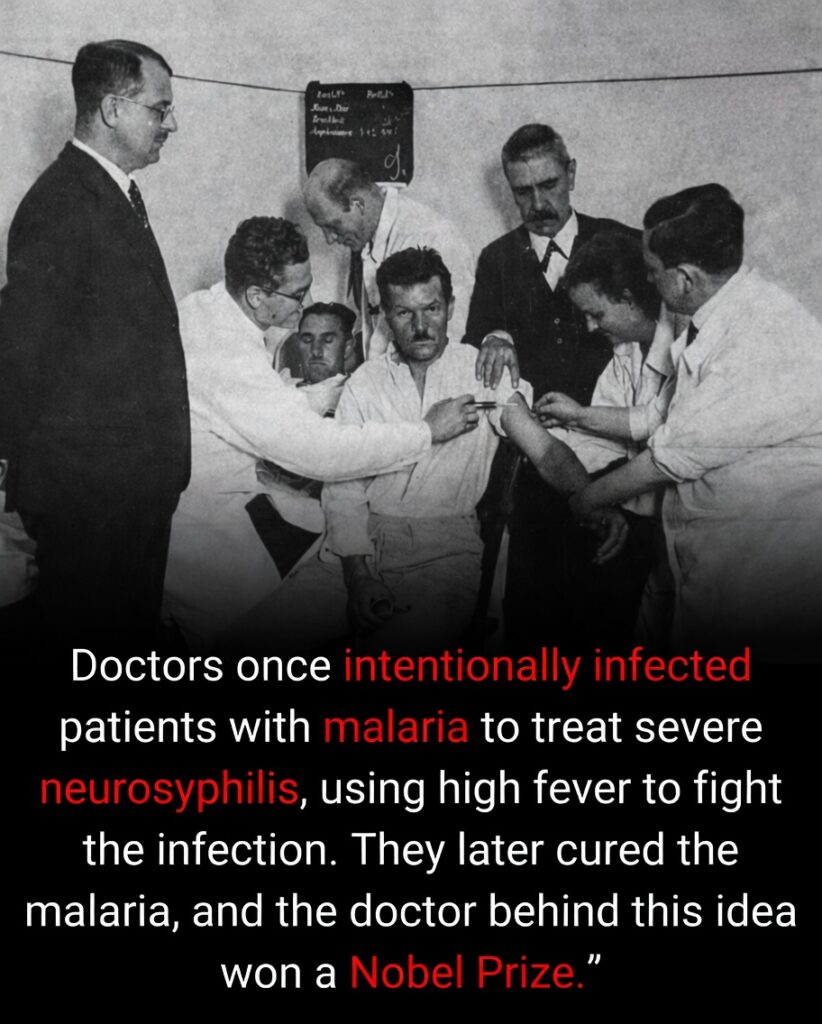
Before antibiotics were discovered, neurosyphilis was one of the most feared conditions in medicine. Patients didn’t just get sick—they slowly lost control of their bodies and minds. Families watched their loved ones change completely, with no real hope of recovery.
When Julius Wagner-Jauregg introduced his idea in 1917, many doctors were skeptical. Intentionally infecting a patient with another dangerous disease sounded extreme—even unethical to some. But at the time, doing nothing almost always meant death.
So they tried it.
Patients were injected with malaria and began experiencing intense fever cycles. Their temperatures would rise dangerously high, sometimes for days. It was exhausting and painful—but something surprising started to happen.
Some patients actually improved.
Their symptoms slowed down. In some cases, their mental state became clearer. For the first time, there was a sign that neurosyphilis could be controlled.
Still, the treatment was far from safe. Not everyone survived the malaria infection itself. Doctors had to carefully monitor patients and later treat them with quinine to stop the malaria before it became fatal.
Even with the risks, this method spread across Europe and beyond. Hospitals began using malariotherapy because, despite its dangers, it offered something that had never existed before:
A chance.
In 1927, Wagner-Jauregg was awarded the Nobel Prize for his discovery. At the time, it was considered a breakthrough—a moment where medicine took a bold step forward using the tools it had.
But medicine kept evolving.
By the 1940s, Penicillin changed everything. What was once a deadly and complex disease could now be treated quickly, safely, and effectively—without putting patients through extreme suffering.
Malariotherapy slowly disappeared from hospitals and became a reminder of how far medicine had come.
Today, it’s remembered as one of the most unusual treatments in history—where doctors fought one disease… by using another.