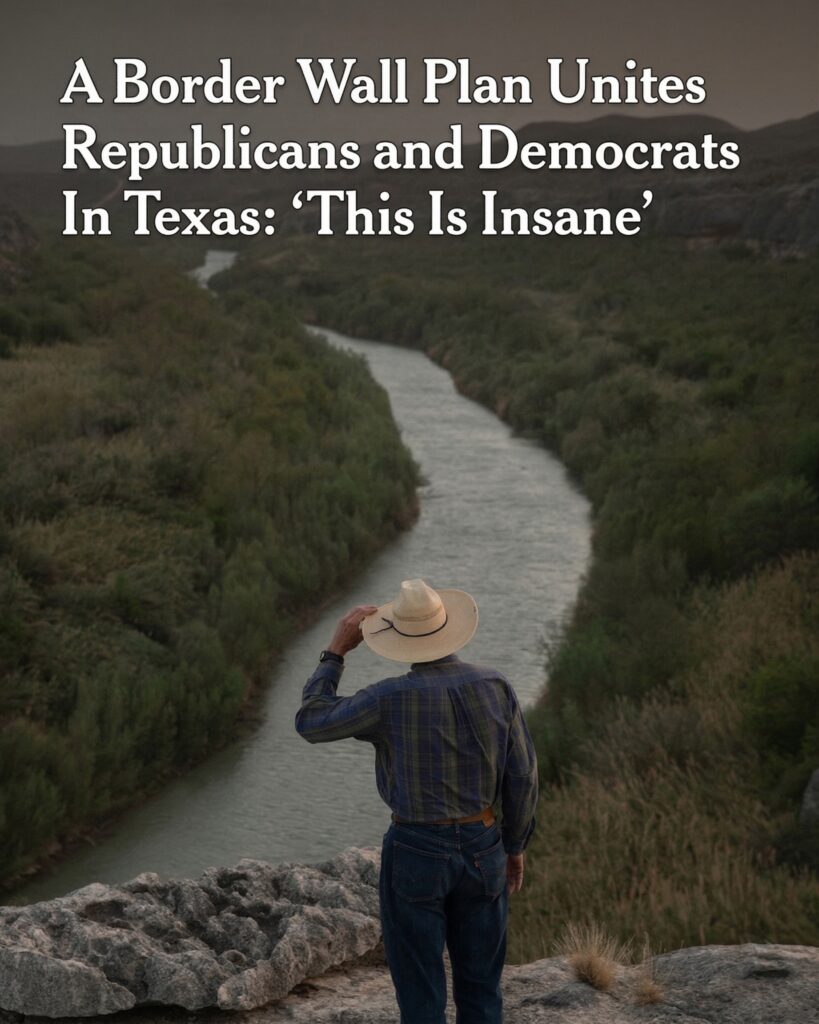
For years, President Donald Trump’s promise to “build the wall” along the nearly 2,000-mile U.S.-Mexico border was a central pillar of his administration’s agenda. While construction proceeded in various desert and urban stretches, one proposed section ignited a fierce and remarkably diverse opposition: the plan to erect a massive barrier directly through the rugged heart of Texas’ Big Bend National Park.
Big Bend is not your typical border crossing area. It’s one of the largest and most remote national parks in the lower 48 states, known for its dramatic Chisos Mountains, vast Chihuahuan Desert expanses, and the steep limestone canyons carved by the winding Rio Grande. This river serves as the international border, and for decades, the park’s official stance had been one of “soft border” management, relying largely on the terrain’s natural formidable barriers and technology.
However, the Trump administration’s push for a continuous physical wall, backed by billions of dollars in allocated funding, brought Big Bend into sharp focus. The proposal outlined plans for miles of heavy steel fencing or concrete walls, which opponents argued would irreparably scar one of America’s last true wildernesses.
The reaction was swift and multifaceted. Publicly, the proposal was met with outrage. Protests erupted in nearby Texas communities like Alpine and Marathon, and national environmental groups mobilized their members, labeling the plan an ecological disaster. Conservationists warned that a physical barrier would disrupt vital wildlife migration corridors for species like desert bighorn sheep and black bears, cut off access to critical water sources in the Rio Grande, and damage delicate archaeological sites.
Yet, perhaps even more significant was the behind-the-scenes opposition. A quiet lobbying effort emerged, uniting traditional adversaries. Local ranchers, dependent on the river and access to the vast landscape, found themselves on the same side as staunch environmentalists. Business owners in tourism-dependent towns expressed deep concern that a massive wall would destroy the very natural beauty that draws hundreds of thousands of visitors annually.
This coalition worked strategically to apply pressure directly to Washington. Reports surfaced of influential Texans, some of whom had previously supported other wall construction projects, quietly urging the administration and key Republicans in Congress to reconsider the Big Bend section. They argued that building a wall in this terrain would be prohibitively expensive, logistically nightmarish, and ultimately, largely ineffective for its stated security purposes, suggesting instead a greater reliance on surveillance technology and increased Border Patrol presence.
As construction contracts were being considered, the fight over Big Bend became a powerful symbol of the complex interplay between national security, environmental conservation, and local interests. The quiet, persistent efforts by this diverse alliance demonstrated that even amidst intensely polarized political landscape, the protection of a unique national treasure like Big Bend could create powerful, unexpected consensus. The battle highlighted the reality that fulfilling a political promise might come with a cost too high for many, even those who otherwise supported the broader goal.